Rack
Good quality and good service based on reasonable prices.
605, 606racks, Mainly used in data centers for hosting, protection, management of core products.
| Image | SKU | Name | Categories | Detail |
|---|---|---|---|---|
![]() | ZC-FV110H | ZB Open Rack | Rack | |
![]() | ZC-FV110H | ZA Open Rack | Rack | |
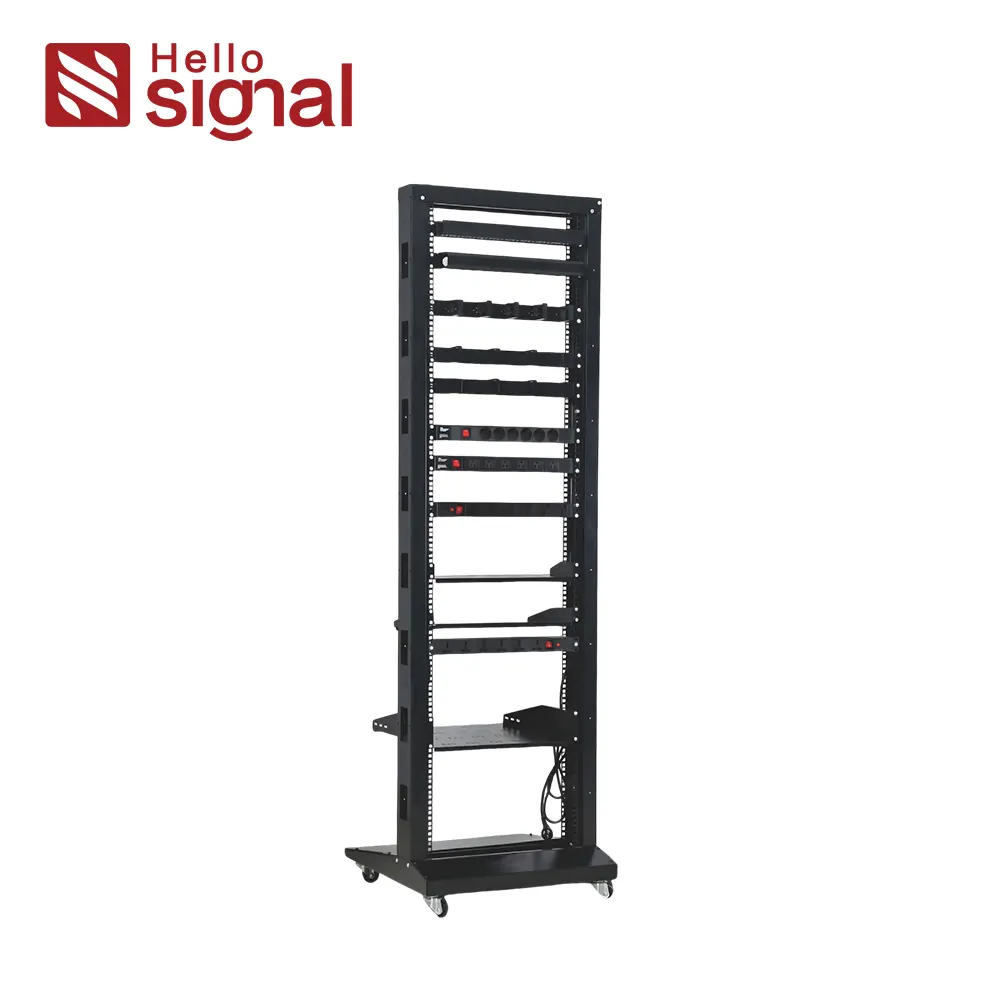
![]() | 7245106-7245110 | 606 Open Racks | Cabinet Fitting, Rack | |
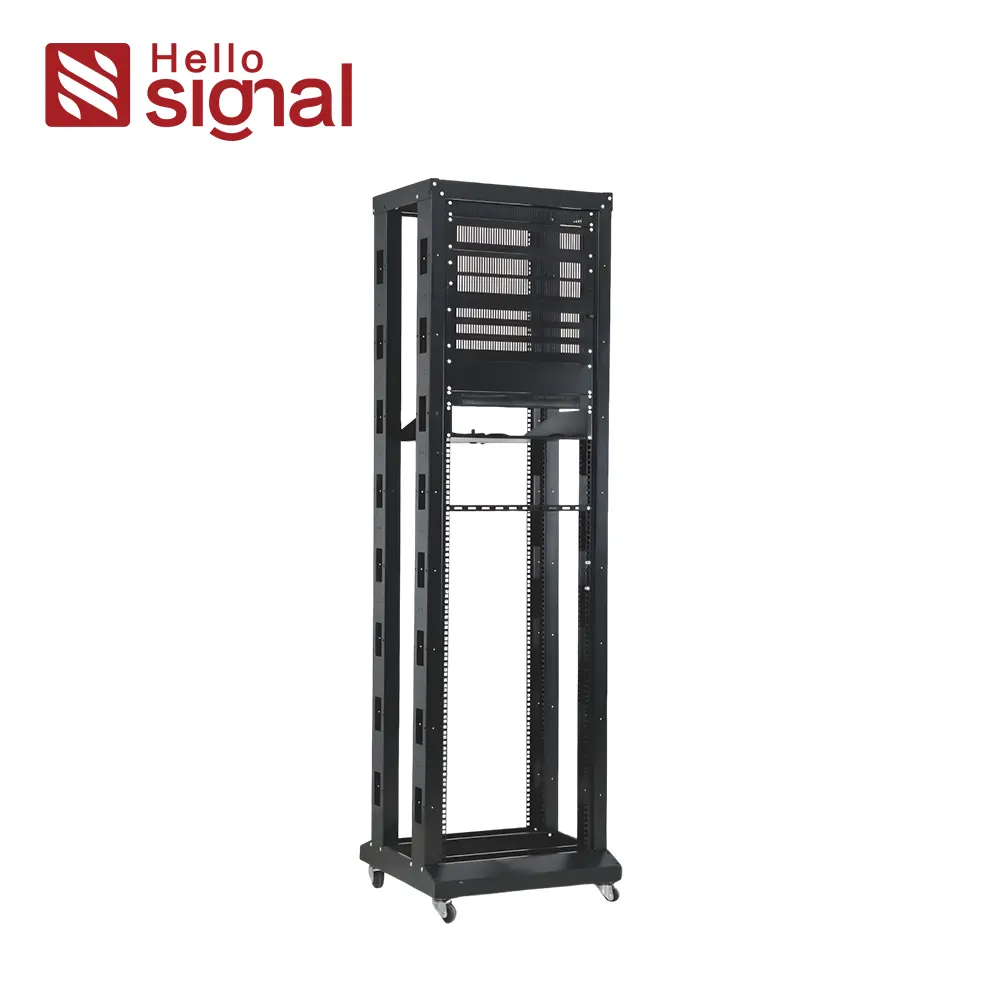
![]() | 7245101-7245105 | 605 Data Racks | Cabinet Fitting, Rack |
Contact us for a price
Speak To Rack Specialist
Customize Your Rack

Confirm The Type
First confirm key information including Rack Type, Rack Size, Loading Capacity...

Recommed Price and Seveice
After confirming all the details, our sales experts will recommend the right Rack that suit your needs, along with a quote and service.
What is open rack?
Open racks constitute specialized structures found in data center spaces, server rooms, and IT hardware environments, mainly for the purpose of holding and preparing network and server incidents. Open racks are distinct from the cabinets, which include side panels and doors. They do not possess such features or deploy such components. Through the following, we will specify some of them and depict their employment in everyday situations:
Structure and Design:
- Standardized Sizing: Open racks are often sold in standard dimensions. Typically, the width of racks not exceeding 19 inches is the most common among the rest. The height is represented in rack units (symbol is U). 1U equals 1.75 inches.
- Frame Style: It is called a frame-based style that has the frame completed and sheathed with a roof and closed doors. It provides sufficient support for electrical equipment like motors or transferring heat.
Accessibility:
- Easy Access: Absence of the assembly of boards constructs or locks disposing of the fact that the equipment will be able to be approached via the following provided paths without great difficulty. Hence, installation, maintenance, and troubleshooting are afforded considerable ease for the users.
Ventilation:
- Airflow: This has proved to improve airflow around the equipment being operated. During the hottest periods of the day, ventilated roofs can assist in alleviating excess heat and make the system more efficient.
Cable Management:
- Ease of Wiring: The exterior construction process makes it simple to guide wires, duct them, and incorporate them as needed. The places are, therefore, perceived as expedient during the transitions and when shifting to new equipment.
Cost and Space Efficiency:
- Cost-Effective: Generally, the straightforward design of cabinets with free-standing shelves is more affordable than the concealed ones.
- Space-Saving: It is also true that some arrangements are space-efficient, especially in places that have adequate environmental control.
Limitations:
- Security and Protection: Presents a more affected risk from physical or environmental aspects in comparison to enclosed cabinets. The ‘not’ among areas with a lot of dust, dampness, and cases where there are breaches.
What is open rack?
Ideal Environments: These works excellently in dedicated environments where standardized monitoring and protection against natural disasters or human interventions are not extremely vital.
Open racks allow for easy access to frequently used devices and the wildlife that tends to come in and out of this area. Therefore, the environmental hazard and security risks concerns are lower within such spaces. Models are repeatedly used in IT, telecommunications, or network setups in these situations due to their low cost and readiness to use.
Mainly Types of open racks from ZION
How to select/chose the right open/frame rack?
Arranging a computer room or data center layout within a small area and costly items, therefore, means maximizing the use of the room to get the best equipment arrangement. These scenarios come to the fore for open-frame server racks, and their positives prove extremely beneficial with respect to network facilities’ administration.
Benefits of Open Frame Server Racks:
- Cost-Effectiveness and Accessibility: The prices are quite low, so one can easily afford them. Also, the maintenance becomes simpler and cost-effective due to its easy and clear access interface.
- Airflow: It also prevents equipment from being air-tight, which improves the cooling process as there are no walls or side panels, thus allowing airflow unhindered.
- Load Capacity: A two-post rack can hold anything in between 1,500 lb., having its limit, while a four-post rack can take anything in between 2,200 lb. Other than suits being the nature of the equipment.
Choosing Between Two-Post and Four-Post Racks:
Two-Post Racks: The two-post racks are best for light load cases, such as patch cable panels and fiber enclosures that are below 20 inches (510 mm) in depth. Four-Post Racks: Doing the matter for larger-capacity, heavier equipment that includes network switches as they provide more support than front and rear mounting types. When one has to adopt a rack system, the meaningful factors to look around for are durability, safety, security, stability, and strength. Furthermore, one should not neglect to standardize the rack mount dimensions. Some of the following include:
- Width: Review the rack width in detail and ensure it resembles the width of the equipment you are going to be using.
- Depth: Among four-post racks, the depth that must be picked out is declared as needed to ensure the room for which your equipment is built.
- Height: The rack height determines the number of available rack-mount unit (U) spaces.
- Space Planning: Allow for an aisle to be wide enough in front and back of the rack (making sure it is at least three feet) and also track above and around the wires, adding all required clearance space.
Email us, Call us, Meeting online with us!
Tell us about your purchasing plans!
We specializing in designing, manufacturing communications infrastructure & equipment and providing customized services for our customers!
Email:sales@hello-signal.com
Give Us A Call:+86 15715730101


